What Is a “Psychoeducational Evaluation” and Should My Child Have One?
If your child is struggling at school with learning, you may be concerned about whether he or she might have a learning disorder, such as a reading disability/dyslexia, math disability, or written expression disability. Or, you may wonder if there might be an attentional deficit (e.g., ADHD), or if your child might be just “bored” and not challenged. Alternatively, you may be concerned about emotional issues, such as anxiety or depression, which may be affecting your child’s learning progress.
If you are experiencing any of the above concerns, pursuing a psychoeducational evaluation for your child can be a useful way for you (and your child’s teachers) to discover some answers.
There are several areas that Dr. Gilbert assesses in her psychoeducational evaluations:
- Cognitive Ability
- Academic Achievement
- Social/Emotional/Behavioral Functioning
- Attentional Functioning
The cognitive assessment provides information about an individual’s intelligence, revealing any strengths as well as weaknesses. Areas assessed include verbal reasoning, visual-spatial skills, nonverbal abstract reasoning, working memory (auditory and visual), and processing speed. This information can be very useful in understanding your child’s thinking and reasoning abilities. For example, if your child’s verbal reasoning skills are significantly better than his or her nonverbal reasoning skills, it may be that your child may understand new information more easily when it is presented in a verbal, rather than visual, format.
Moreover, if your child is found to have a weakness in working memory and/or processing speed, this may mean that, in order to learn, your child may require information to be repeated, or may need to be exposed to material on multiple occasions, or may need the pace of instruction to be slowed down. Further, within working memory, it can be very useful to discover whether your child may have a weakness in recalling either visual or verbally-presented information. In this way, your child’s teacher can then be sure to introduce material in a format that works better for your child. The cognitive assessment may also determine whether your child is a gifted learner, and in need of gifted instruction at school in order to appropriately stimulate and capture your child’s learning motivation. Knowing your child’s intellectual strengths and weaknesses can especially help teachers to understand that your child can learn, but that he or she may need strategies or accommodations to facilitate that learning.
The academic achievement assessment measures a child’s achievement in reading, math, and written language. In reading, the areas of sight-word reading, phonetic decoding, oral reading fluency, and reading comprehension are assessed. When children are young and their reading skills are still emerging, Dr. Gilbert often includes a test of phonological processing to investigate foundational reading skills. For math, timed math facts, untimed math calculations, and math reasoning are measured. In the area of written language, sentence composition skills, spelling, and essay composition skills are evaluated. This information may then be used to determine whether a Specific Learning Disorder is present in reading (dyslexia), math (dyscalculia), or written expression (dysgraphia).
To assess a child’s social, emotional, and behavioral functioning, parent and teacher rating scales are used. When appropriate, the child may also complete a self-rating scale. These scales include a wide range of concerns that children exhibit, including acting-out behavior, symptoms of anxiety and depression, and adaptive skills such as adaptability and social skills. Rating scales are also used to assess whether a child may be exhibiting significant difficulty with inattention, hyperactivity, and impulsivity. Lastly, a computerized test is administered, which measures a child’s ability to sustain his or her attention, as well as to resist impulsive responding, when exposed to both visual and auditory information. Dr. Gilbert is then able to consider all this data, in conjunction with the child’s history, to determine whether ADHD may be present, or if anxiety is a primary factor preventing the child from making adequate school progress, or if depression may be playing a role, or if an Oppositional-Defiant Disorder may be at play. Included as part of the evaluation is a meeting with the parent(s) to review all the assessment data, and to discuss best practice recommendations that are provided by Dr. Gilbert. Because Dr. Gilbert is a certified school psychologist (in addition to being a licensed psychologist), she can guide parents in navigating the complicated world of special education services and IEPs if appropriate.
If you are interested in more information, please contact Dr. Gilbert’s office. The testing typically involves 4-5 hours of direct testing. The cost is generally $1250 – $1450, depending on what assessments are needed. Remember to bring your child’s eyeglasses if they are needed, to make sure your child goes to bed on time the night before, and that your child has a good breakfast/lunch prior to the assessment.
VELVET STEELE
Everything I Needed to Know About Recovery—I first Had the Opportunity to Learn in Little League
By KEN WELLS, LPC
Life is rooted in community which is about bonding in relationships. Bonding is strongest within communities where values are forged, convictions are cemented and care for one another is formed. When bonds are broken, community suffers from its break down. I learned early in life that baseball is a microcosm of life.
Little League is about fitting in. It’s not unlike any other sport for a kid. Belonging matters. It’s that way for adults, too. Regarding addiction, I never met an addict who did not struggle with fitting in. It’s a common struggle for most. Without this experience of belonging in relationship, most addicts don’t recover.
It was a warm spring day when my youngest son Sam came running in after school and announced “Coach called and I got practice today at 6pm”. He had been drafted in Little League and his coach called to tell him whose team he was on and when the first practice would begin. You would have thought the president of the United States had called. Everything about belonging and fitting in was wrapped up for a little kid in that announcement. That is so much about what Little league was about— fitting in. Though it doesn’t happen as much as desired, in the early stages the rules of the game of baseball are designed to promote belonging and fitting in. Kids don’t get cut in Little League baseball. Every kid plays at least 2 innings— at least in my town they did. During the early leagues, no one kept score. But that didn’t last long. Still, the focus was including everybody. Baseball and other sport is about bonding. When players decide to hang up their cleats and retire after a short or long career, one of the things they miss most is the chemistry, connection and camaraderie they had with their baseball fraternity.
Most stories I know about addiction center around this profound issue about bonding, belonging and attachment. The way I know I matter is when my parents participate with me on my terms in sufficient amounts of time. When it doesn’t happen I am prone to subconsciously search for significance through performance in ways that might get mom and dad’s smile of approval. The problem is when I become an adult I can never perform enough. Eventually the focus on performance becomes very painful and empty. At this point, an addict can never get enough of what he really doesn’t want. He then seeks to medicate the painful emptiness with an addictive behavior.
Kids who love to play sport experience at an early age the magic of belonging. Little League creates this experience for many. But, for the kid who either doesn’t like baseball or sport, community can become very painful when sports are heavily emphasized.
I remember when my oldest son Jimmy played varsity baseball in high school. There was a home school kid, Jamie, who tried desperately to fit in as he attempted to make the team. He was not a great player but adequate. Yet, he could not fit in and was unable to create a sense of belonging. It was painful to watch. Jim’s team won the state championship that year but missed an opportunity to learn how to build community through acceptance of someone who was different. Looking back, the memory of a championship season faded. But, the reality of intolerance, exclusion and judgment that fuels hatred, strife and addiction continues to permeate communities throughout our world.
A lack of connection in community always fuels socially destructive behavior including epidemic addiction . I won’t forget a friend whose name was Sigler and who attended the church college that I attended. He was from Detroit. He moved into a dorm and lived on the same floor that I lived. It was a dorm floor that for the most part was dominated by kids who grew up in the South and who were redneck about their religious beliefs and life in general. I did not grow up in the South but I loved the fun loving ways that was demonstrated in the lives of these guys. Somehow, I was able to fit in. Sigler didn’t. The school was conservative and evangelical. It was important to be “born- again”. You would not fit in if you were not.
Apparently, Sigler, had been forced to go to this Bible-based school by his parents. He was unhappy about being controlled. He gave evidence of his displeasure by wallpapering his room in Playboy and Penthouse pinups. He smoked cigarettes and cussed a lot, too. Sometimes, he even smoked in his dorm room. Well, for Bible-belt, fundamental, southern boys who had come to learn to preach the gospel, this behavior was a “no-go”. So Siglar was picked on and excluded from the community. In fun-loving seriousness, a few of the southern boys decided to take matters in hand. One time one of the southern boys whose name was Danny, took a cigarette from Sigler’s pack of Winston’s and with tweezers pulled out the tobacco. He inserted a firecracker and re-packed the tobacco. Later, Sigler went to get some beer at a Seven Eleven convenience store. He pulled out a smoke from his pack and lit up. It began to sizzle. It blew up in his fingers while Sigler was looking at it, wondering what the heck was going on! It was fortunate that he did not get hurt seriously. When hearing about the story from Sigler later, Danny, the culprit, with a capricious smile uttered “Turn or Burn Sigler!”.
On another occasion, Sigler was asleep in his dorm room. He did not have a roommate. One of the southern boys stole the master key that fit all of the dorm rooms from the Resident Assistant (R.A). About 3am, he took a paint pan and filled it with wadded toilet paper. He then sprayed hair spray all over the paper. he turned off the hall lights and sprayed Sigler’s door with hairspray as well. He recruited a partner in crime, then quietly unlocked Sigler’s room. On the sly, he tiptoed up to his bed. Sigler was in a deep sleep. He positioned the paint pan just above Sigler’s chest. He took Sigler’s cigarette lighter and lit the paper which immediately burst into flames. At the same time his partner in crime lit the hairspray on the door which also burst into flames. Then they both screamed “Fire!-fire!-turn or burn, Sigler”! Even though there was no damage done to the door or to his room, needless to say, the prank scared the hell out of Sigler, who had been terrorized out of a deep sleep by this craziness. He was a far better sport than what I would have been, had the trick been played on me. Sigler never returned to the school after that year and I never saw him again. For sure, he left, not fitting in and of course, unconverted.
Learning to deal with not fitting in is an important skill to master throughout life. Most addicts cope with this dynamic destructively. What I have come to believe is that throughout the course of life we all become “Sigler” in that we have the experience of not belonging at different times throughout life. I won’t ever forget the sense of lostness I felt when I transitioned from stardom in Little League to being average to eventually disappearing from the baseball scene in my hometown, during my youth. It was very painful and lonely.
Much later, I will never forget the first time I walked into a 12 step room for my first meeting to address my addiction. It was lonely and I certainly did not think of myself as fitting in. Even yet, it occurred when I shed my conservative heritage and embraced a more liberal theology than the mother church I grew up. Clearly, I no longer fit in. It hurt and I was very lonely by all accounts. I felt judged and was excluded from many experiences. I had the age old experience of feeling like I was “on the outside, looking in”. It was the loneliness and non acceptance from an old familiar community that was most painful. I had lost a sense of belonging. It must have been what Sigler felt.
Over the years, I have come to appreciate the opportunity that Little League baseball presents about how to live in community. Baseball for kids can introduce a critical communal element of acceptance that is so necessary for all.
Most people who attend 12 step meetings to address an addiction will never forget their first meeting. It is just about as tenuous as what the Little League kid felt at his first practice. There is such a fear of exposure and rejection. It is common to hear afterwards the amazement of inclusion, kinship and lack of critical judgment. For many, the magic of the meeting is found in the sense of belonging and spirit of unconditional acceptance. The fundamentals of community building begin with a sense of belonging and like Little League, the design of a 12 step meeting is to draw a circle wide enough to include everybody.
There’s a story I read about a guy who was able to capture a vision for inclusion as a way of reconfiguring limitations that most folk just accept. His name is Phil Deason. He seemed to believe that everyone could know the freedom and power of belonging and fitting in. He created the Moody Miracle Baseball League in Conyers, Ga. Apparently, in 1996, a mother of a spunky 3 yr old with Down Syndrome approached him. Her son desperately wanted to play ball. Phil was the president of the local youth sports association. So he put the baseball wannabe in a non competitive league which seemed to be fine.
Eventually, the boy grew too old for the league which provided the impetus for Deason to start a baseball league for people with special needs. The league developed into 10 teams with players from 7 different counties. In the game, every player gets a chance to bat, every at bat is a home run, and every game ends in a tie. Some of the players have Down Syndrome, while others are autistic or suffer from cerebral palsy. One woman was blind and her guide dog leads her around the bases. In the Moody Miracle League, everybody gets to fulfill the dream of playing baseball. Volunteer “buddies” are assigned to the players to walk the bases with the players or may stand in the field alongside them to make sure no one gets hurt.
One of the volunteer umpires said, “Some of the players can only blink or smile, but to see their faces light up when everyone stands and cheers for them, well, it’s a blessing.”
Deason himself says, “In regular youth associations, parents will holler because of a bad call or a child who didn’t get to play, but at a Miracle League game, you hear them talk of gut wrenching decisions between buying a new car or their child a new electric wheelchair. That puts it all in perspective.” He added that where he grew up, most folk fantasize about what they want in life. Few find a way to make their dreams come true and include those who most likely don’t fit.
Recovery is about people who get stuck obsessing about their fantasy and lose touch with reality. It is for those who do not think they fit or feel that they belong in social situations. These folk fail to find a way to make their dreams come true because of their stuck condition. Not many people use their creativity like Phil Deason did, to adjust the focus of their dream to include space for human brokenness. When brokenness remains unaddressed, people become manacled with failure and shame. People begin to feel disconnected and isolated, believing that somehow they do not fit. Life becomes a zero sum game fraught with losers and all too few winners. It’s a life formula that produces a driven culture where no one can ever get enough. Cultural addictions connect to a point where frenzied, frazzled folk can’t get enough of what they really don’t want. It’s a destructive dynamic that is founded and fueled by toxic shame traced to the very earliest days of our lives. The strategy of Little League baseball is to underscore the importance of the inclusion of all as necessary to the building of caring community. It is from this place of belonging that Little League teaches a child to fulfill destiny and make their dreams come true.
In recovery, without a community to belong, an addict will lose focus and most often relapse feeling like they never really fit in. The fundamental dynamics of belonging so vintage to building community as early as in Little League, is an absolute necessity in building a solid foundation for recovery in addiction.
Article by Ken Wells
On a weekly basis, I meet with women in my therapy practice who feel like they are not good moms. When I explore this with them, I find that in contrast to their feelings of failure, they are doing a really good job. Their children are thriving: They do well in school, they have friends, and participate in lots of different activities. And when their children have struggles (a part of thriving), they verbalize the thoughtful way they approached the situation.
I thinks it’s important to admit that I, a psychologist and a mom who should know better (notice the unhelpful, negative thought), struggle with not feeling like a good enough mom, too. Parenting is the most humbling job no matter how well prepared you think you are.
Many things contribute to creating and sustaining moms’ feelings of not being good enough. Many of us are struggling to balance our mommy roles with other roles in our lives and are feeling stressed about not doing everything perfectly. So, in this first entry, let’s look at the concept of being a good enough mom.
The concept of the good enough mother was first coined by Donald Winnicott in 1953. In his work as a British pediatrician and psychoanalyst he observed thousands of babies and mothers and came to realize that babies and children actually benefit when their mothers fail them in manageable ways. They need their primary caretakers to fail them in tolerable ways on a consistent basis to learn to live in an imperfect world. Like trees blown around by wind, children grow stronger by managing challenging events in their lives. The good enough mother is cognizant of her child’s development stage and supports her child’s learning and growth.
60 years later and good enough mothering hasn’t made its way into mainstream thinking. That is terrible. We need to change how we define parenting and celebrate it. Good enough is not mediocre. Good enough is thoughtful. Good enough is making rational choices. Good enough is supporting each other to be the best mom we can be. Good enough frees us and our children to be imperfectly perfect. Let’s start with getting the word out. #goodenoughmom
Article by Cathy Walls
Sometimes when challenging things happen, there is something explicit you can do to alleviate the problem. You get a nail in your tire? Patch it. There is a miscommunication with your spouse? Talk it out. You do poorly on a test? Study harder next time. You feel lonely? Initiate with a friend.
Other times, there is less that can practically be done to change the situation. The death of a loved one, the loss of a job, being abused, a hard break up, financial strain, a natural disaster.
In these situations, your natural instinct may be to do something that is not helpful at all, something that may actually exacerbate the problem. You may isolate, turn to alcohol or drugs, spend beyond your means, cut yourself, etc. The good news is, there are other ways to cope. These ways of coping are not magical and will not make all your problems go away. What they will do, however, is help you get through the distressing time as gracefully as possible. They may help you hold yourself together and get the support you need so that your response to the problem doesn’t create even more problems for you.
In light of the myriad of natural disasters recently and the looming threat of attack on our country, here are eight tips that can help you manage your distress:
http://www.apa.org/helpcenter/hurricane-stress.aspx
More and more young children are using the internet unsupervised. Lack of supervision leads to accidental exposure and misconceptions of love. Lange offers several great tips and considerations if you and your child are faced with this situation. These include:
- Considering the age of the child
- Using the exposure as a means to educate
- Ways to respond as a parent
- Starting the conversation early
- Providing reassurance
- Ways to address accidental exposure
- Expressing concern for regular exposure
- Disbanding assumptions
Over a two week period, my wife and three of my children expressed frustration with number of questions I was asking. The expressions included all the non-verbals: eye rolls, sighs, and wagging heads. Finally, after a particularly aggravating evening of late night homework, my youngest erupted, “Stop! Asking! Questions!”
I wish I could say I calmly responded and settled into an emotionally connected, scrapbook memory moment with my son. However, I threw up my hands, executed my own eye-roll, and abdicated parenting to my wife, who had just returned home.
In the aftermath, I defaulted to defensive thoughts—“I can’t even get an answer to a question around here” or “how are you supposed to have a conversation if people don’t want to answer questions” or “See if I try to help anymore.” All valid but not very productive. Later, with feet kicked up on the sofa—and alone, I might add—it dawned on me, every person living with me is letting me know I ask too many questions. Not just one person. Not just two. Every person. How could I ignore that? Believe me, I tried.
So, I checked it out with a friend, who thought it was funnier than I did, but confirmed what I dreaded—I better listen to my family. I had to recognize that I can use questions to keep me safe, protected in a bubble of curiosity. I do not have to share something about myself if I can get you talking. Also, questions keep me in the role of “fixer.” Let me know what to do and I’ll do it. In that role I don’t have to get down in the muck of emotion of not “fixing.”
Now I am working on less questions, less fixing, more sharing, and more feeling. It takes a little work, but conversations are going much better. Next time a spouse, friend, son, or daughter gives you a little feedback, before you snap back with why they are wrong about you, or what makes them hard to live with, or start feeling sorry for yourself, it might be good to entertain the possibility that they might be right. They may be giving you a gift. Are you listening?
By Doug Withrow, MDiv, LMFT, MSC, S-PSB
VELVET STEELE
By KEN WELLS, LPC
“Nobody ever beat themselves up to a better place”
As a parent of kids who played Little League baseball, I experienced the importance of being gentle with the kids who played the game. I watched kids cry when they struck out and feel devastated when their team lost because of an error they had made. As a professional therapist there were times that I seen adults literally pound their heads on the wall because of an addictive act out in behavior. So much self despise and very little acceptance.
Over the years I studied both, athletes and addicts around this dynamic of getting down on themselves when triggered by shame over a mistake or destructive behavior. I soon learned that those who were successful long term were individuals who neither ignored the destructive behavior and mistake nor condemned themselves with excessive self criticism. They were able to stay the course, nurture their wounded psyche to a better place of stability in order to gain traction and face the next challenge.
Those who did not learn this important self care skill usually beat themselves up to another mistake or act out experience. For example, when I was in junior high, I loved to play basketball and became pretty good at shooting the ball, enough so, that I made the starting 5. During those days of my young life, I’d run out onto the court with the best intentions to contribute to my team’s success only to screw up in some way. I’d miss a shot, make a bad pass or forget where I was suppose to be on defense. Then while running to the other end of the court, I’d scream at myself for screwing up. In time, I learned to automatically beat myself up. Even when I was successful, I told myself I could have done better. My own self trash talk took its toll and soon my performance began to suffer. To no surprise, I soon was sitting on the bench long forgotten and bewildered. Coach Waltrip one time said “Wellsie, you will get to play more when you learn to get your head out of your butt”.
It wasn’t until much later as an adult that I was able to understand that “nobody ever beat themselves up to a better place”.
I must admit that one of the great skills to be mastered in recovery life from addiction is that of “Velvet Steel”. By this I mean to understand and implement the dynamic of being gentle (Velvet) with yourself where you need to be gentle (i.e., with personhood around mistakes/wrong choices we make). In juxtaposition, there is a commitment to being tough (Steel) where I need to be tough. Such places include doing the next right thing in order to sustain recovery so that I do not continue the cascading plunge down the slippery slope of relapse.
So many times athletes and addicts get it mixed up. They tend to be gentle where they need to be tough and tough where they need to be gentle. This dynamic always leads to self sabotage and ultimate defeat.
In the book of James of the Bible there is a description of wisdom that is from God in contrast to wisdom that is not. One of the characteristics of wisdom from God is translated “consideration”. The understanding of the background of what is being suggested is that wisdom from God has a kind of “sweet reasonableness” to it. It is likened to a parent that carefully weighs when to apply the strict letter of the law and when to go gentle when a child behaves inappropriately. The emphasis demands sensitivity and intuition. Rather, than it being a static formula of step one, two or three, the idea is that it requires the parent to cultivate the art form of “velvet steel” and to carefully administer sensitivity to the spirit of the child. This art form is necessary for long term sobriety as well. The athlete also needs to better understand when to go gentle and where to be tough.
I have learned that the most important aspect of maintaining life balance and long term sobriety as an addict is this art form of velvet steel when it is honed and mastered by the one in recovery.
Trauma has a way of knocking the wind out of life energy. When it occurs, panic stricken behavior dominates an individual. It feels like the rug being pulled out from under you. As you scramble you wonder how will you ever be able to survive? It happens when a partner to an addict discovers betrayal or it is experienced by the addict when relapse occurs. There is this fearful frenetic cold sweat that breaks out as you scramble to get your feet underneath you. No one escapes this experience- whether athlete, addict or otherwise. It is crucial that I learn to stay the course by positioning myself with poise in order to do the next right thing. It requires that I “steel” myself in order to focus my thoughts in the here and now. It demands the consideration of executing the gentleness of healthy self soothe.
This dynamic never unfolds with any appearance of textbook description. Mastering velvet steel will drag you through uncertainty, intense anxiety and a sense of groundlessness. It only can be employed by those who are willing to brave the embrace of emotional bewilderment and unpredictable outcomes.
Velvet steel is the essential framework that is necessary to embrace the reality of forgiveness. Without healing gentleness (velvet) toward self there is no letting go of shame around poor choices and behavior. We get stuck with the focus on self disgust and contempt. We settle for being harsh and tough where gentleness is needed. Ultimately, we carry out trying to beat ourselves up to a better place wondering why it doesn’t work.
It is only the power of compassion applied through gentleness do we heal ourselves from our moments of mistaken judgments and dubious behaviors. Destiny fulfilled requires Velvet Steel.
By Ken Wells, MA, LPC, CSAT-S, LISAC
VELVET STEELE
The Prima Donna Makeover
By KEN WELLS, LPC
“I’m on a Drug. It’s called Charlie Sheen”—Charlie Sheen
“Everything I ever needed to know about recovery from addiction began with a Little League type experience”—Ken Wells
There is a certain mark of hubris which characterizes life in addiction. In many ways the essence of addiction is self absorption. Addiction is like a cancer. It eats up all the other cells until it takes up all the space. Feverishly, it devours more and more until finally it is consumed by its own presence and dies a horrible death.
The cure to the hubris that dominates addiction is humility. It’s a radical paradox. Humility is what you are when you don’t know it. It is found in a coachable spirit. In humility there is a candle lit way deep inside with a burning desire to live differently no matter what it takes.
Most addicts who walk into recovery don’t have it. Even if they come into recovery having lost everything or fearing they might. There is a certain attitude of being “pissed” about losing their “friend” that carries with it a mind-set that “no one can tell me what I need to do”. Step One becomes a rude slap in the face by demanding the embrace of powerlessness and the reality of un-manageability. Most addicts who walk into a 12 step meeting, show up in a prima donna makeover. The first step is about undressing the hubris and putting on the cloak of humility. Humility is best taught through life experience. My wife and I raised three boys. All of them played Little League baseball. Little League is all about lessons in beginnings. First steps in recovery are the same. Many miss the opportunity to learn humility from their beginnings whether it is in the arena of Little League or recovery.
One year, my son Sam played on a summer league baseball team. During the course of the game, the umpires made a few calls that Sam’s coach thought questionable. Finally, a call was made that pushed the coach over the limit and he stormed out of the dugout to give the umpire a piece of his mind. He told him what he thought and wouldn’t let it go. The umpire called the coach by name and warned him to back off. The coach was not going to have anything to do with that. So the umpire threw the coach out of the game. Most folk thought that was the end of that. But, the coach took one step back and told the umpire that instead of him being thrown out, he (the coach) was throwing out both umpires, reminding the umpires that he was the one who hired them in the first place. So the umpires packed up their gear and left, without pay. The final few innings were finished without the paid umpires.
The coach gathered his team around him in left field to go over the highlights and the lowlights of the game which was his normal routine. I thought to myself that here is an opportunity for the coach to reconcile the behavior by demonstrating a leadership moment of humility in telling the players that he had acted like an ass and was willing to apologize to players, parents and the umps. In addition, I was hoping that he would tell the kids that the umps would be paid double. But, the coach never mentioned the umps and only talked about the players’ performance. Encounter with humility missed!
I believe the coach lost an opportunity to teach a lesson on leadership by telling the kids that leaders, including coaches can screw up and blow their perspective. It could have been a powerful experience of humility that got lost in the coach’s hubris. Rather than model a valuable trait that builds community, the coach remained stuck in his tunnel view and missed the potential meaningfulness of the moment.
Recovery reflects what gets missed in Little League. Addiction runs rampant. Addicts depend far too much on hubris to get them through and only resort to humility to pick up the pieces of a broken and shattered life from compulsion.
Hubris is a major culprit in the destruction of relationships in our world today. Addiction lacks humility. It takes up too much space in relationship living. It’s like a balloon in a room that gets blown up so big that it smashes everyone else against the walls. There’s no room for consideration, compassion and understanding.
Long lost since way before Little League is the attitude that “it’s how you play the game not whether you win or lose”. Coaches miss the opportunity to teach the magic of being coachable when they don’t embrace the content of humility. Life experience brings some through the ravages of addiction dominated by unmanageability and powerlessness to teach the transformation of humility.
Typically, key components for adult living that are missed in places like Little League show up later in my office in the form of devastating addictions. The prima donna makeover “I want what I want when I want it” expresses itself through audacious pretentious living in the mentality of a little kid in an adult’s body.
Addiction recovery is essentially about emotionally growing up and learning to delay gratification and sit with discomfort. Prima donna makeover is about learning to be humble, a much needed lesson whether you are a Little Leaguer or an adult sifting and sorting through the destruction of addictive living. When it comes to addiction, Charlie’s right!. As an addict, all I need to do is replace Charlie’s name with my own. What gets lost is the healing power of humility without which the value of beginnings go unnoticed. Everything I really needed to know about recovery, I was first exposed through experiences like Little League.
By Ken Wells, MA, LPC, CSAT-S.
A cautionary warning to parents regarding the Netflix series, 13 Reasons Why, and recommendations for their children. Article by Cynthia Shaheen, Principal, Horizon Honors Secondary School. Recommendations by our PCS Psychologist, Dr. Gloria Gilbert.
Your child’s safety is always at the forefront of my mind. Last week a new Netflix series debuted that has caused some alarm. Adapted from a young adult novel, 13 Reasons Why is a fictional story of a high school girl who commits suicide after leaving behind 13 cassette recordings for the 13 people she names as responsible for her death. Mature issues abound throughout the series including rape, teen drinking, voyeurism, and graphic imagery of the portrayal of the actual suicide. While the story could help parents start conversations about isolation, bullying, and depression, the way the series addresses these issues is complex and confusing for impressionable viewers.
The show has caused much conversation and social media buzz about teen suicide especially among 5th – 12th grade students. On the surface this could appear positive, but suicide is the second leading cause of death for teenagers. Our PCS Psychologist, Dr. Gloria Gilbert, has provided insight that one of the noted risk factors for teen suicide is the viewing of media portrayals and the phenomenon of “suicide contagion”. Research has shown that teens are more susceptible to contagion than adults resulting in an increase in suicide attempts and deaths after being exposed to the suicidal behavior of others.
I recommend all parents consider the intensity of this series as well as the social-emotional maturity and well-being of their child before allowing any viewing. If your child is watching the series I would recommend you discuss the show with them or even watch the show with them prior to discussion.
Speaking openly and directly with teens about suicide is very important. The Society For The Prevention of Teen Suicide has some great suggestions on how to approach the topic, which can be found here.
–Article by Cynthia Shaheen, Principal, Horizon Honors Secondary School
Dr. Gilbert has also provided some additional links and further information on suicide related topics can be found below.
Influences of the Media on Suicide
Influences of the Media on Suicide – National Institutes of Health
Suicide Contagion
To Talk or Not to Talk? The Dilemma of Suicide Contagion – The Conversation
Teen Suicide is Contagious – Newsweek
Young People Especially Vulnerable to Suicide Contagion – Standard Examiner
Resources Specific to 13 Reasons Why
Talking to Your Kids About 13 Reasons Why – The Mighty
13 Reason Why – Common Sense Media
Does 13 Reason Why Do More Harm Than Good? – Junkee
What Parents Can Do…
Suicide Prevention – National Institute of Mental Health
Managing Media for Teens and Tweens – Common Sense Media
Additional Resources
Healthy Mind and Healthy Body: Suicide Prevention Guide
PCS invites the residents of the Valley of the Sun to a free screening of the new documentary film Addicted to Porn: Chasing the Cardboard Butterfly addressing the challenging ordeal of pornography addiction. Filmmaker Justin Hunt has established himself as a proficient producer of groundbreaking documentaries such as American Meth (meth addiction epidemic in America) and Absent (impact of absent fathers in our society). His newest film tackles head on the controversial and sensitive topic of pornography addiction and its global reach. He has done so without using a single provocative image which sets this film apart from any other work touching on this subject matter. It was produced with the intention to not take a stance on the issue but rather to generate a conversation about it for viewers to form their own opinions as they process it with others in their lives.
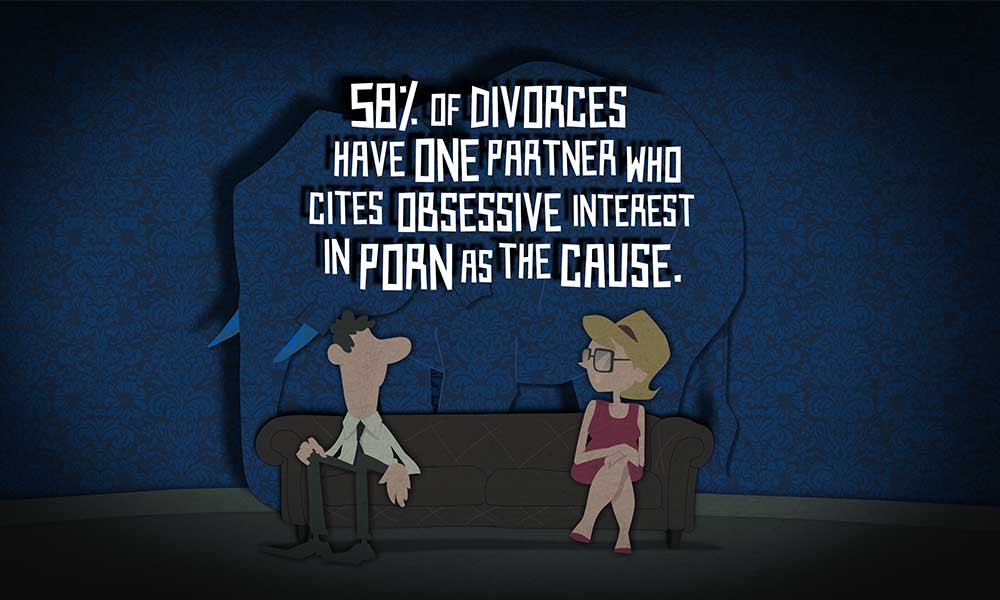
Come join PCS for a unique opportunity to experience this screening and a discussion with the filmmaker and our very own PCS therapist, Mark Bell, who was extensively included in the film. Come alone, with a spouse, with a partner, with a friend, or with a family member. You will appreciate the experience and leave with an increased awareness towards the ever-present and ever-evolving trial of pornography addiction.
 PCS and IITAP (International Institute for Trauma & Addiction Professionals) will be hosting this community event on May 5, 2017 at 8pm at The Pointe Hilton Squaw Peak Resort (7677 N 16th St, Phoenix, AZ 85020).
See the following links for a preview of the film and a current article highlighting the making and purpose of this film:
https://atpdoc.com/
https://www.thefix.com/addicted-porn-compulsion-shame-anxiety

 (480) 947-5739
 info@pcsintensive.com